Ruichen Xu 徐瑞辰
普通话 · Mandarin (Pinyin): Xú Ruìchén
粤语 · Cantonese (Jyutping): ceoi4 seoi6 san4
Ph.D. Candidate
Computational Applied Mathematics
Department of Applied Mathematics & Statistics
Stony Brook University
Also known as Bill Xu
ruichen.xu@stonybrook.edu
Introduction
I am a Ph.D. candidate in Computational Applied Mathematics at Stony Brook University, advised by Dr. Yuefan Deng. My research lies at the intersection of machine learning and scientific computing, with a focus on AI for Science.
I study how learning systems can use incomplete observations and physical structure to solve scientific problems. My work spans neural operators, predictive representation learning, physics-aware generative models, and LLM-guided optimization. I also teach applied mathematics and mentor student research at Stony Brook.
Research
- Learning from partial observations. Neural operators and benchmarks for reconstructing PDE fields from sparse and irregular measurements.
- Predictive representations for scientific data. Joint-embedding learning for PDE inference and multi-resolution graph representations.
- Physics-aware generation and optimization. Diffusion, simulated annealing, and LLM-guided search for physical systems and molecular design.
News
All news[2026.08] SERVICE Accepted the invitation to serve as a reviewer for ICLR 2027.
[2026.08] PAPER HP-JEPA, our work on multi-resolution graph predictive learning, is available on arXiv. [PDF]
[2026.06] SERVICE Serving as a reviewer for Transactions on Machine Learning Research (TMLR).
[2026.06–07] GROUP Mentored AI4Science projects in the AI3 REU program at Stony Brook University.
[2026.06] PAPER Our paper on generative backmapping appeared in Computer Physics Communications.
[2026.05] PAPER Our preprint on test-time adaptation for time-series forecasting is available on arXiv. [PDF]
[2026.05] AWARD Recognized as a Gold Reviewer at ICML 2026 for the quality of submitted reviews.
[2026.01] PAPER One paper on 3D molecular generation accepted to ICLR 2026. [arXiv]
[2026.01] TEACHING Taught AMS 361: Applied Calculus IV at Stony Brook University.
[2025.10] PAPER Our preprint on interpretable neural operators and hidden physical dynamics is available on arXiv. [PDF]
[2025.08] PAPER Three papers accepted to NYSDS 2025 (one oral and two posters): Hamiltonian learning, physics-informed neural networks, and active learning. [arXiv]
[2025.07] PAPER RL-QESA presented as a poster at AI for Math @ ICML 2025.
[2025.06] PAPER APOD accepted to the Assessing World Models Workshop @ ICML 2025.
[2025.06] PAPER Our work on Dynamic Schwartz–Fourier Neural Operators published in TMLR.
[2025.05] PAPER Our preprint on velocity-inferred Hamiltonian neural networks is available on arXiv. [PDF]
[2025.05] PAPER Kolmogorov–Arnold Representation for Symplectic Learning accepted to IJCNN 2025. Co-first author and project lead. [arXiv]
[2025.04] PAPER Our preprint on the impact of move schemes on simulated annealing is available on arXiv. [PDF]
[2025.01] PAPER Our work on discretization mismatch in neural operators accepted to ICLR 2025.
[2024.10] PAPER Our work on Coordinate Transform Fourier Neural Operators published in TMLR.
Selected publications
All publications-
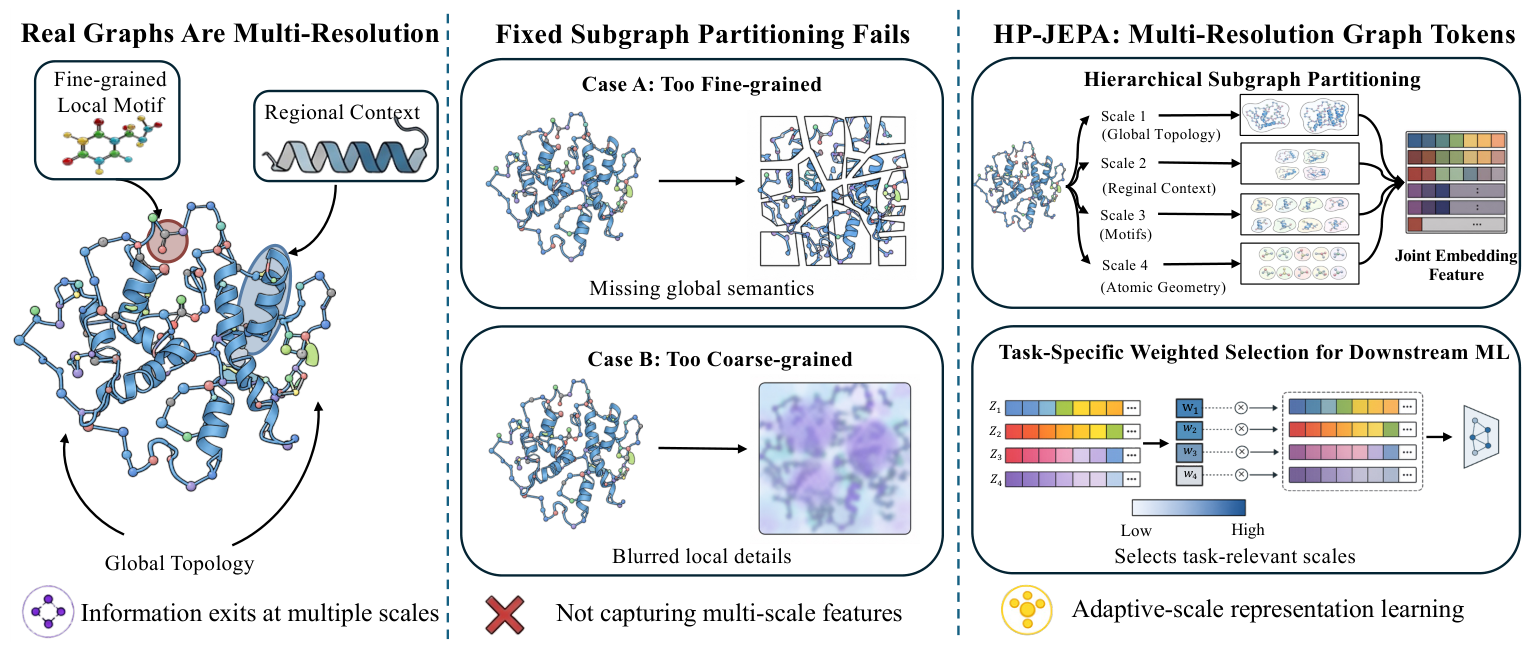
HP-JEPA: Hierarchical Partitioning for Multi-Resolution Graph Joint-Embedding Predictive Learning
arXiv:2608.00491 · 2026
Learns graph representations across multiple resolutions through hierarchical partitioning and joint-embedding prediction.
-
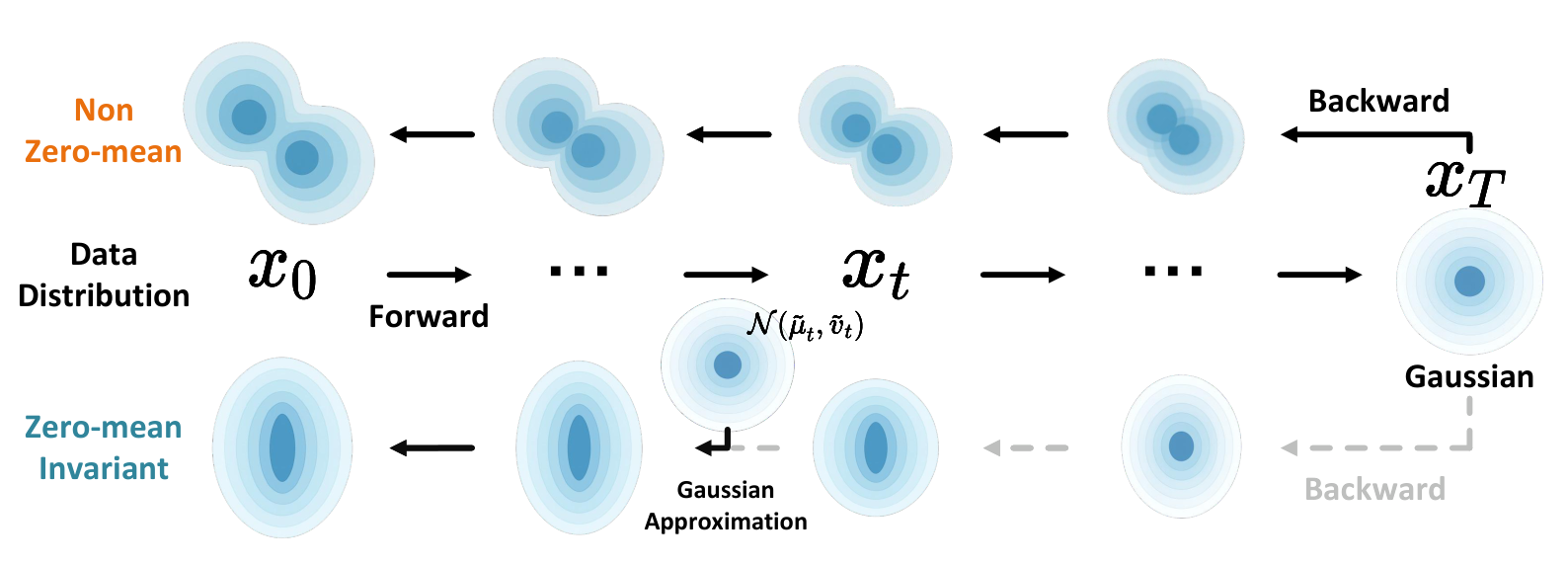
GAGA: Gaussianity-Aware Gaussian Approximation for Efficient 3D Molecular Generation
ICLR 2026
Uses Gaussianity-aware approximations to shorten diffusion sampling for efficient 3D molecular generation.
-
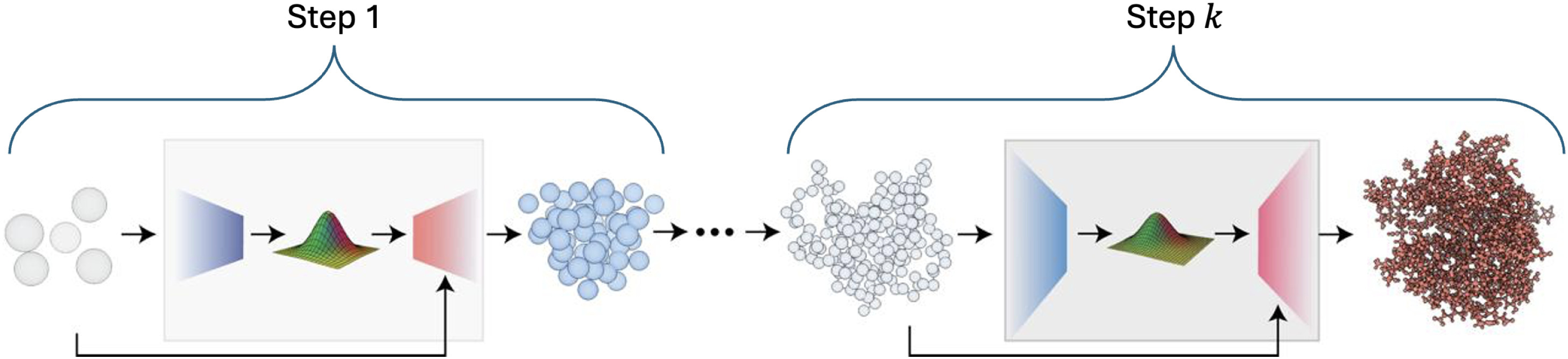
Multistep Generative Backmapping of Coarse-Grained Structures
Computer Physics Communications · 327, 110286 · 2026
Restores atomistic detail from coarse-grained structures through a sequence of intermediate generative models.
-
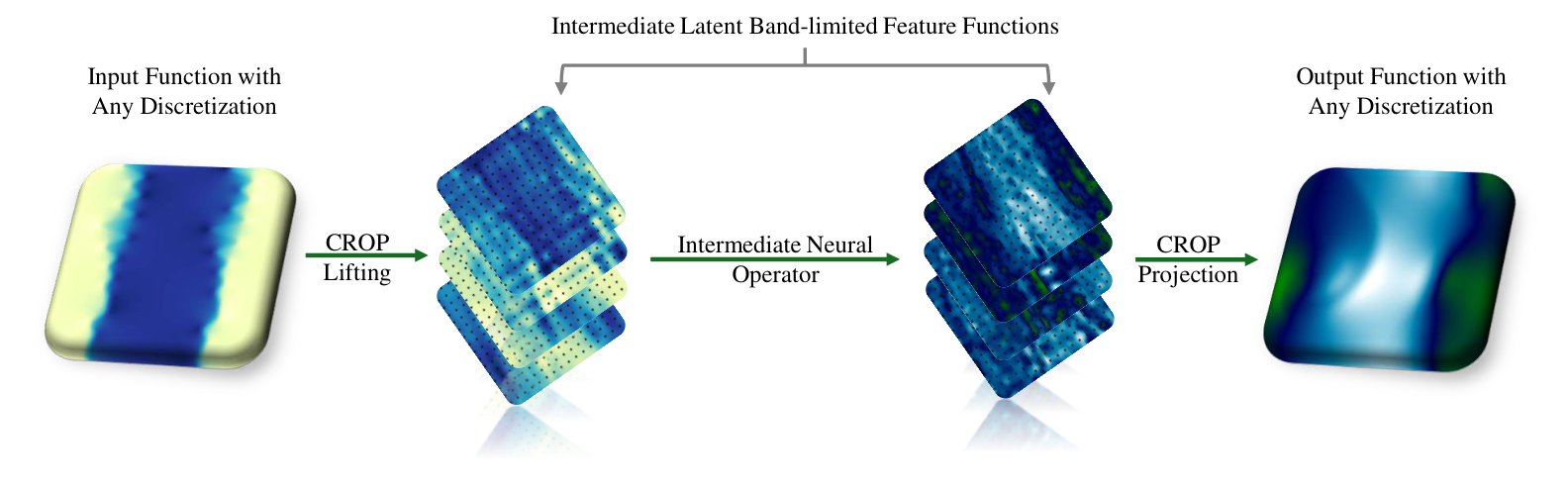
Discretization-invariance? On the Discretization Mismatch Errors in Neural Operators
ICLR 2025
Studies errors caused by changing discretization in neural operators and develops a band-limited latent representation.
-
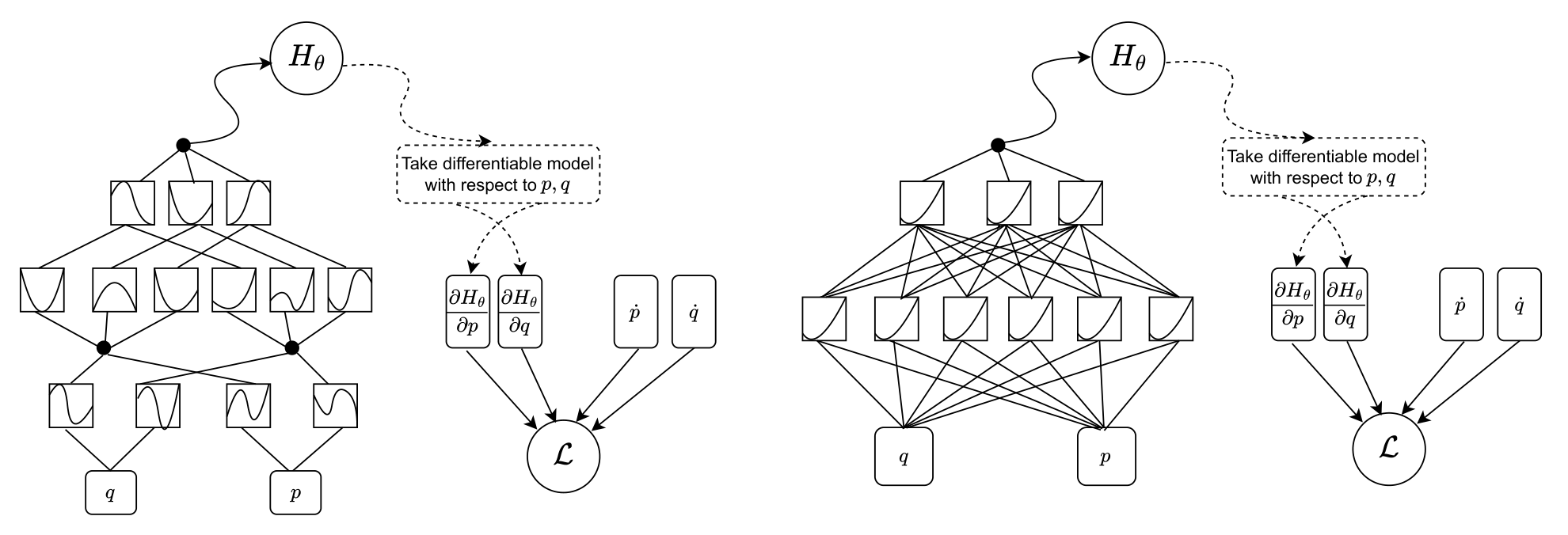
Kolmogorov–Arnold Representation for Symplectic Learning: Advancing Hamiltonian Neural Networks
IJCNN 2025
Combines Kolmogorov–Arnold representations with Hamiltonian neural networks to learn energy-based dynamical models.
-
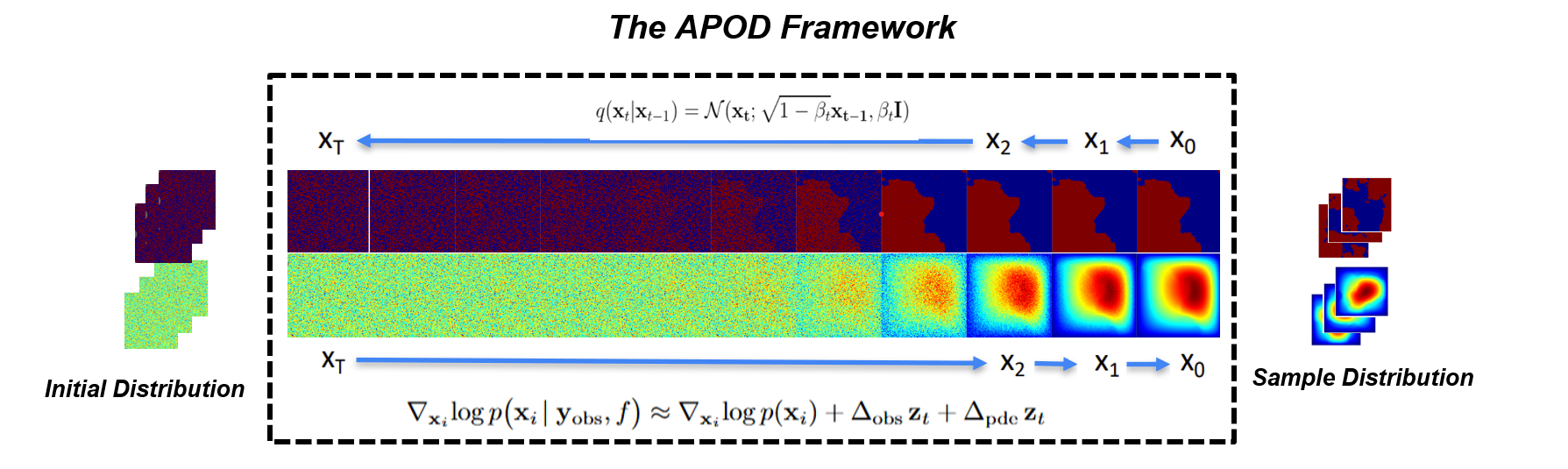
APOD: Adaptive PDE-Observation Diffusion for Physics-Constrained Sampling
ICML 2025 Workshop on Assessing World Models · Poster
Guides diffusion sampling with observations and PDE constraints to recover physically consistent fields.
-
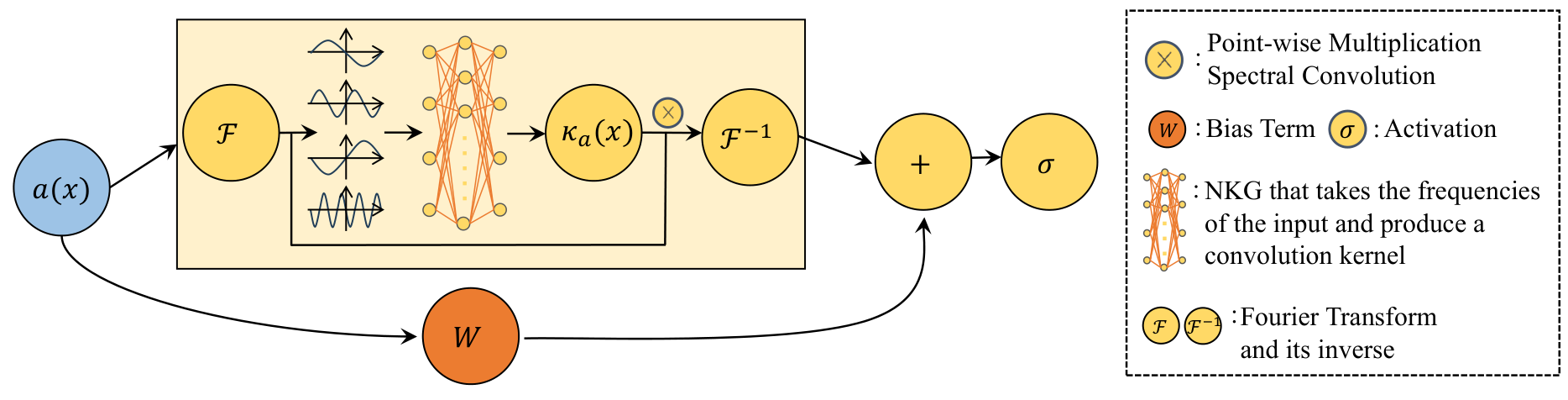
Dynamic Schwartz–Fourier Neural Operator for Enhanced Expressive Power
Transactions on Machine Learning Research · 2025
Introduces input-dependent Fourier kernels to increase the expressive power of neural operators.
Academic service
Reviewing experienceICML 2026 Gold Reviewer · May 2026
Recognized by the program chairs for the quality of submitted reviews.
Conference reviewing & program committees: ICLR (2026, 2027) — 2027 invitation accepted; ICML (2026) — Gold Reviewer; NeurIPS (2026); KDD — AI4Sciences Track (2026, 2027) — Reviewer; 2027 Cycle 1; KDD — Research Track (2027) — Reviewer; Cycle 1; AAAI (2027) — Program Committee member; IJCNN (2025, 2026).
Journal reviewer: TMLR (2026), IEEE TNNLS (2025), and Neurocomputing (2026).
Workshop reviewer: AI for Math @ ICML (2025).