Publications

My publications in scientific machine learning, computational physics, dynamical systems, and molecular generation. See also Google Scholar and OpenReview.

arXiv preprints

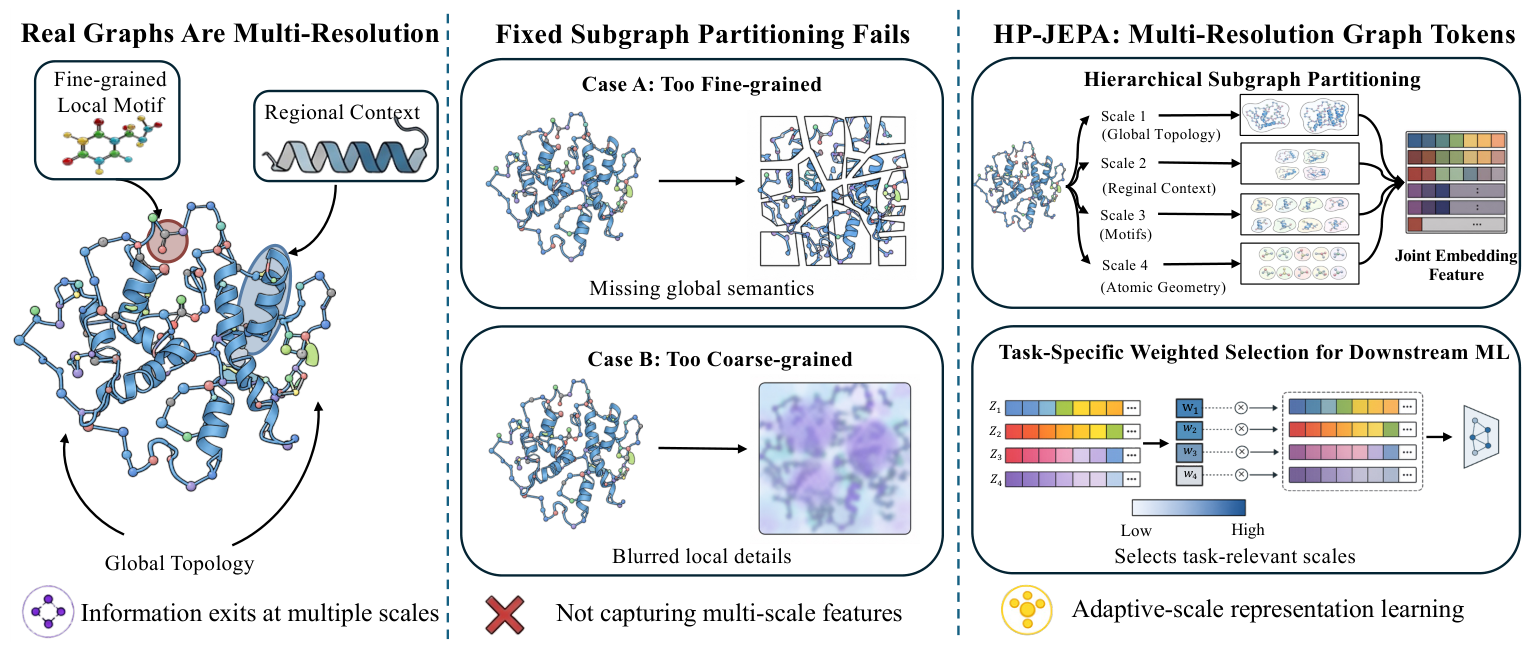
  1. HP-JEPA motivation and overview: multi-resolution graph structure, limitations of fixed partitions, and adaptive resolution weighting.

    HP-JEPA: Hierarchical Partitioning for Multi-Resolution Graph Joint-Embedding Predictive Learning

    Ruichen Xu, Jingxiang Qu, Wenhan Gao, Jiaxing Zhang, Linsey Pang, Ravid Shwartz-Ziv, Yann LeCun, Yuefan Deng

    arXiv:2608.00491 · 2026

    Learns graph representations across multiple resolutions through hierarchical partitioning and joint-embedding prediction.

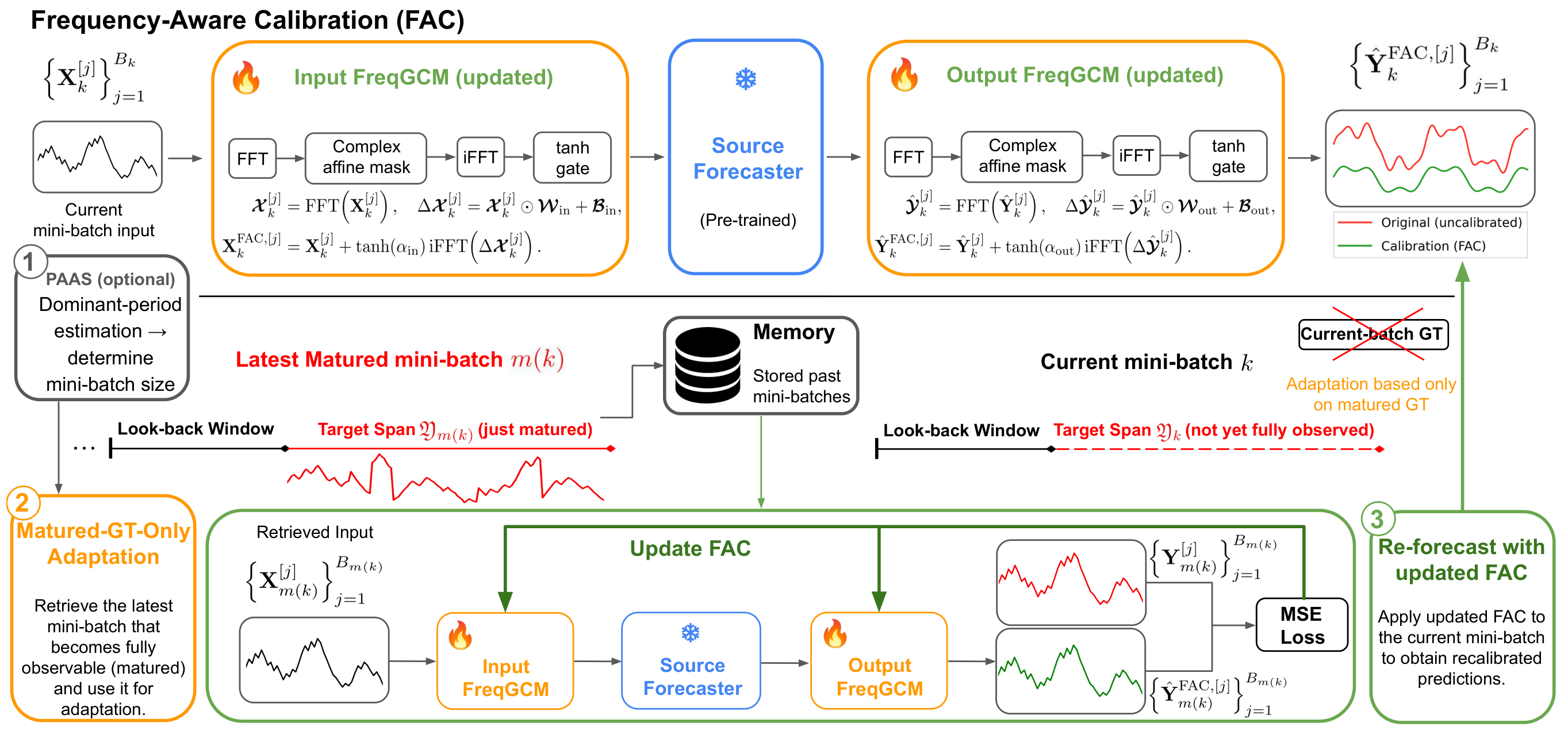
  2. Frequency-Aware Calibration overview shows input and output frequency-domain calibration around a frozen forecaster, adaptation using the latest matured mini-batch, and re-forecasting of the current mini-batch.

    Towards Principled Test-Time Adaptation for Time Series Forecasting

    Haochun Wang, Ruichen Xu, Georgios Kementzidis, Karen Cho, Sebastian Ramirez Villarreal, Yuefan Deng

    arXiv:2605.17250 · 2026

    Adapts time-series forecasts using frequency-domain calibration around a frozen forecasting model.

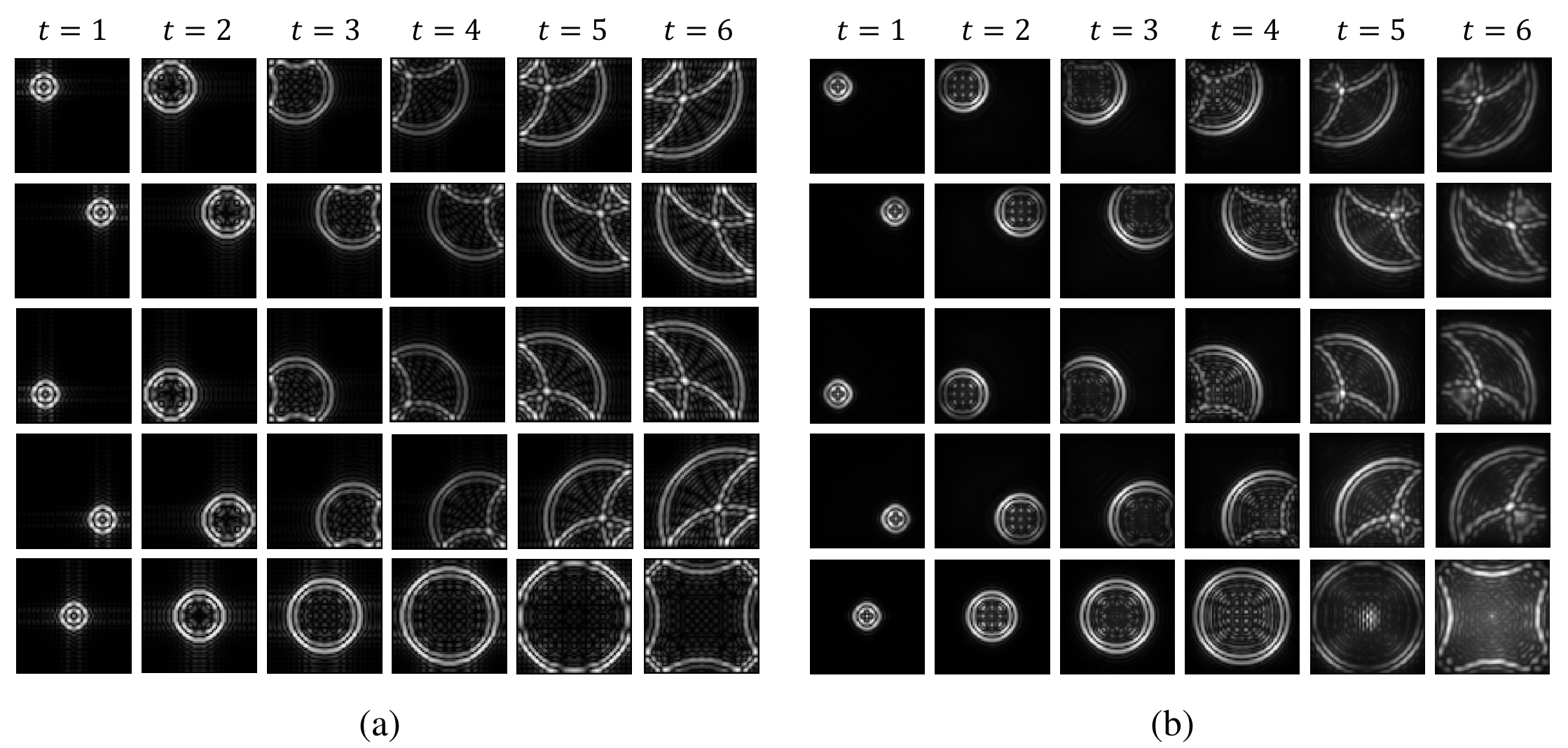
  3. Two grids compare analytical wave-propagation spatial dependencies on the left with patterns learned by a neural operator on the right, across five locations and times t = 1 through 6.

    Can Data-Driven Dynamics Reveal Hidden Physics? There Is A Need for Interpretable Neural Operators

    Wenhan Gao, Jian Luo, Fang Wan, Ruichen Xu, Xiang Liu, Haipeng Xing, Yi Liu

    arXiv:2510.02683 · 2025

    Investigates how interpretable neural operators can reveal physical dependencies learned from dynamical data.

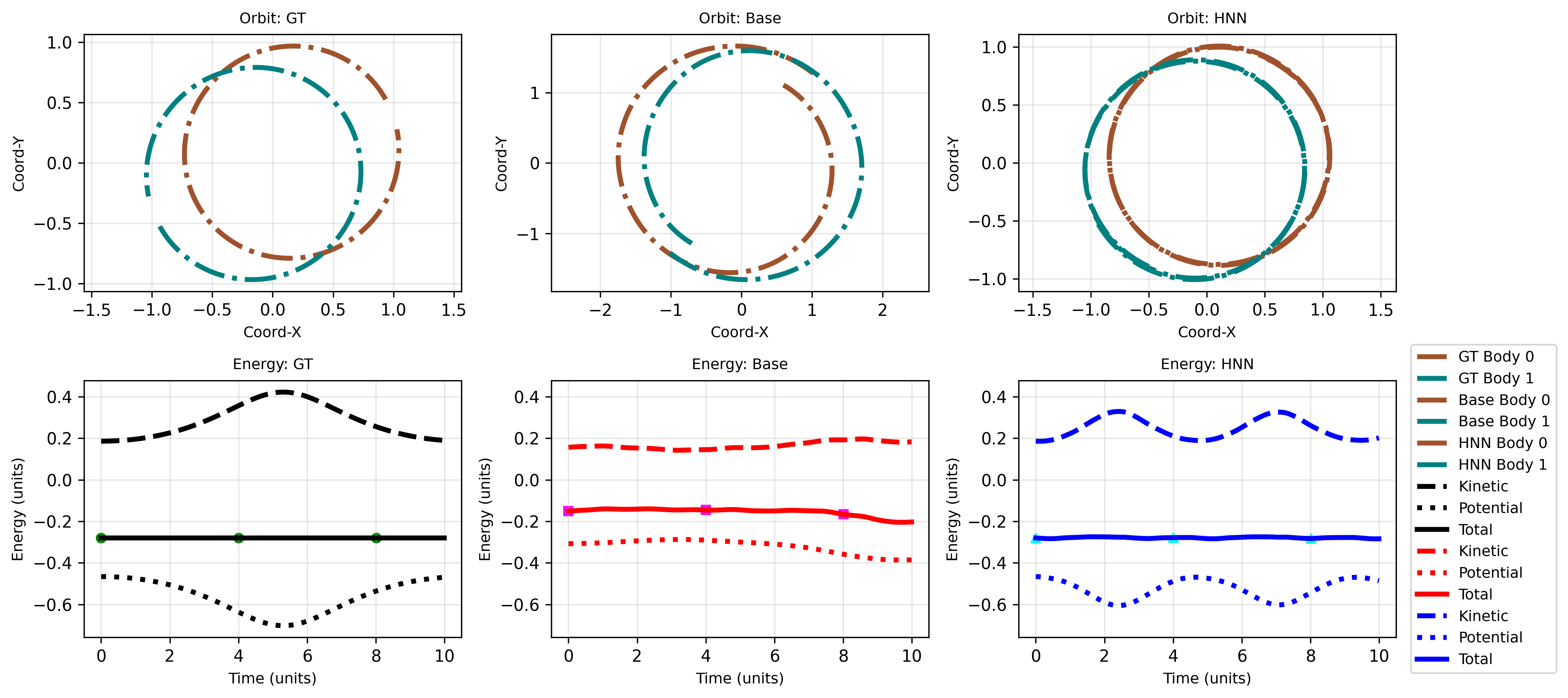
  4. Six panels compare ground-truth, baseline, and Hamiltonian neural-network predictions for a two-body system, with orbital trajectories above and kinetic, potential, and total energy over time below.

    Velocity-Inferred Hamiltonian Neural Networks: Learning Energy-Conserving Dynamics from Position-Only Data

    Ruichen Xu, Zongyu Wu, Luoyao Chen, Georgios Kementzidis, Siyao Wang, Haochun Wang, Yiwei Shi, Yuefan Deng

    arXiv:2505.02321 · 2025

    Learns energy-conserving dynamics from position-only data by estimating the velocities needed for Hamiltonian modeling.

    Earlier preprint; the NYSDS 2025 proceedings paper is listed separately.

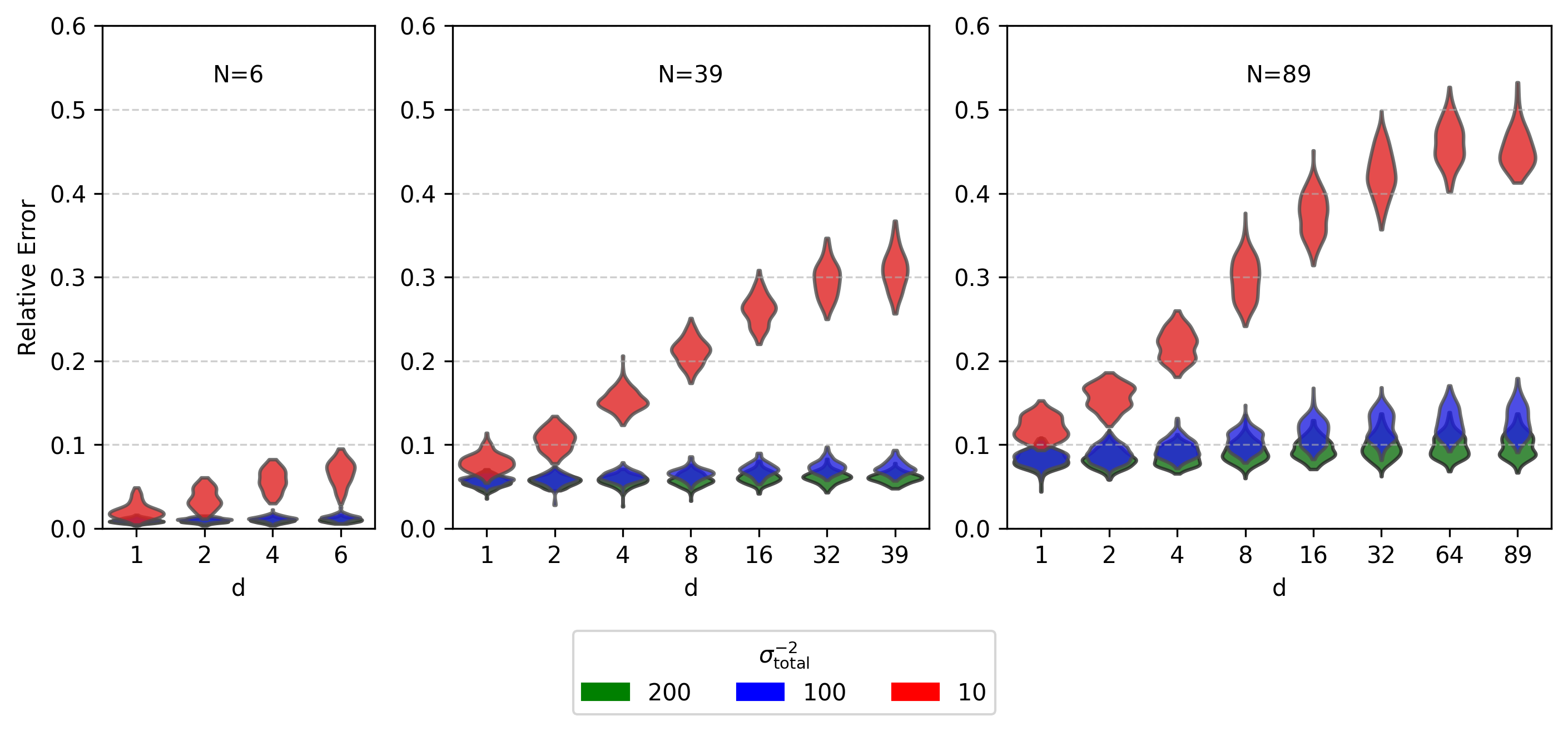
  5. Violin plots compare simulated annealing relative error as the number of moved coordinates increases, for Lennard-Jones systems with 6, 39, and 89 particles and three proposal-variance settings.

    The Impact of Move Schemes on Simulated Annealing Performance

    Ruichen Xu, Haochun Wang, Yuefan Deng

    arXiv:2504.17949 · 2025

    Studies how the number of coordinates updated per move affects simulated annealing performance.

Conference & proceedings papers

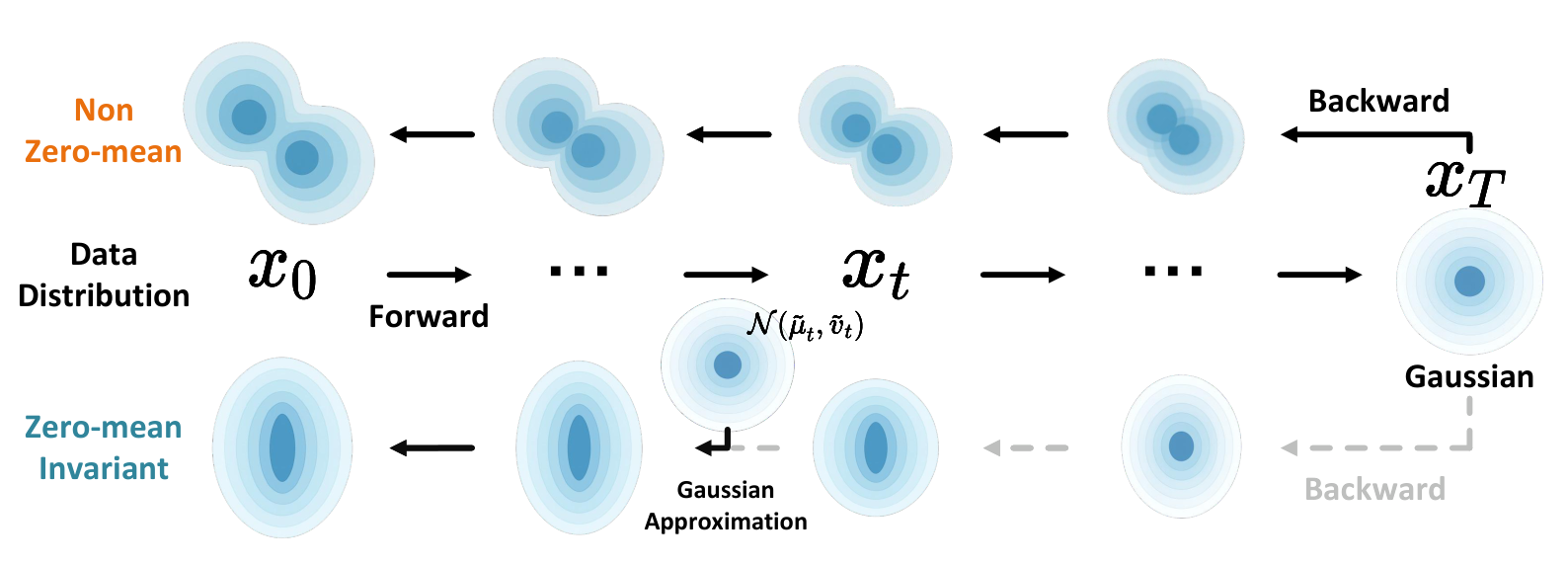
  1. GAGA overview showing forward noising and a Gaussian approximation that shortens the reverse generative trajectory.

    GAGA: Gaussianity-Aware Gaussian Approximation for Efficient 3D Molecular Generation

    Jingxiang Qu, Wenhan Gao, Ruichen Xu, Yi Liu

    ICLR 2026

    Uses Gaussianity-aware approximations to shorten diffusion sampling for efficient 3D molecular generation.

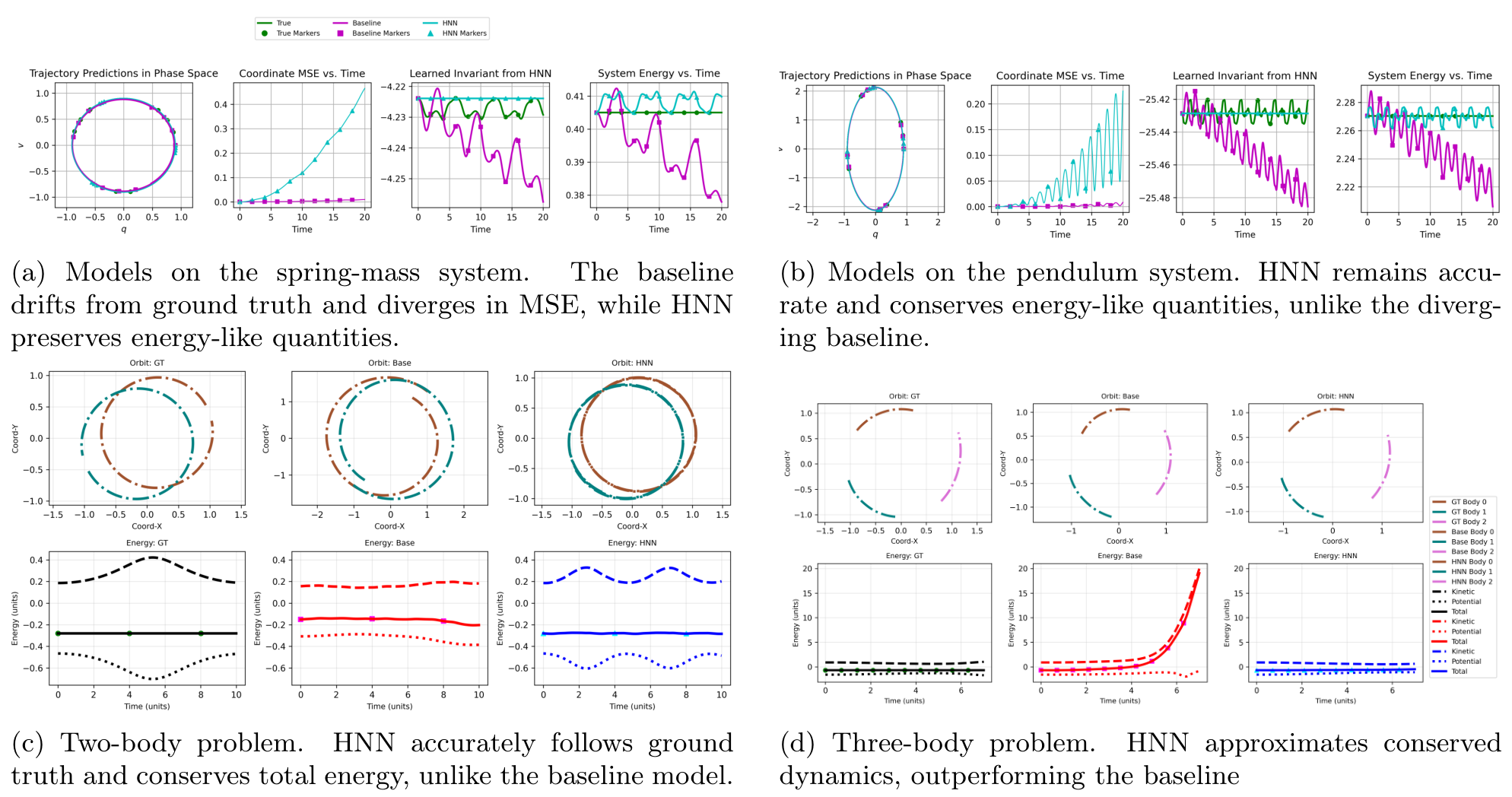
  2. Trajectory, error, invariant, and energy comparisons for baseline and Hamiltonian neural networks on spring-mass, pendulum, two-body, and three-body systems.

    Velocity-Inferred Hamiltonian Networks: Symplectic Dynamics from Position-Only Observations

    Ruichen Xu, Claire Yu, Zongyu Wu, Siyao Wang, Luoyao Chen, Georgios Kementzidis, Haochun Wang, Yuefan Deng

    NYSDS 2025 · SIAM Proceedings

    Infers velocity from position-only observations to learn Hamiltonian dynamics while preserving physical structure.

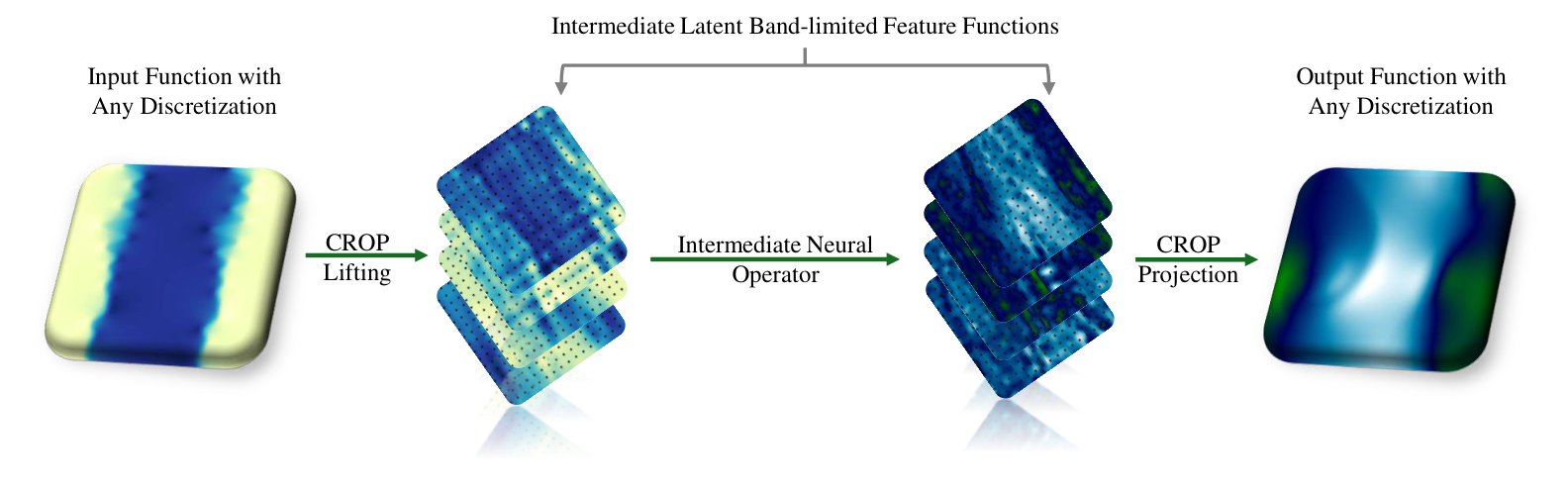
  3. CROP pipeline maps an input through lifting, a neural operator on band-limited latent features, and projection to an output at any discretization.

    Discretization-invariance? On the Discretization Mismatch Errors in Neural Operators

    Wenhan Gao, Ruichen Xu, Yuefan Deng, Yi Liu

    ICLR 2025

    Studies errors caused by changing discretization in neural operators and develops a band-limited latent representation.

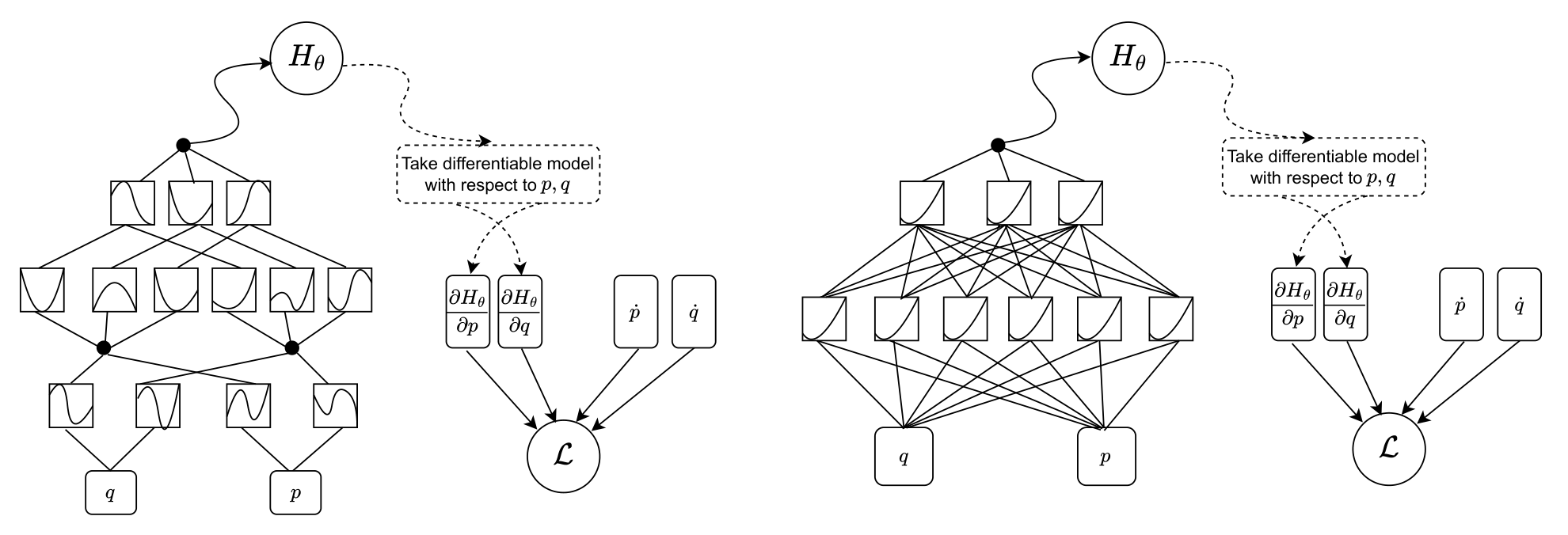
  4. Kolmogorov–Arnold and multilayer-perceptron Hamiltonian neural network architectures, with energy derivatives feeding a shared training loss.

    Kolmogorov–Arnold Representation for Symplectic Learning: Advancing Hamiltonian Neural Networks

    Zongyu Wu, Ruichen Xu, Luoyao Chen, Georgios Kementzidis, Siyao Wang, Yuefan Deng · Co-first author and project lead

    IJCNN 2025

    Combines Kolmogorov–Arnold representations with Hamiltonian neural networks to learn energy-based dynamical models.

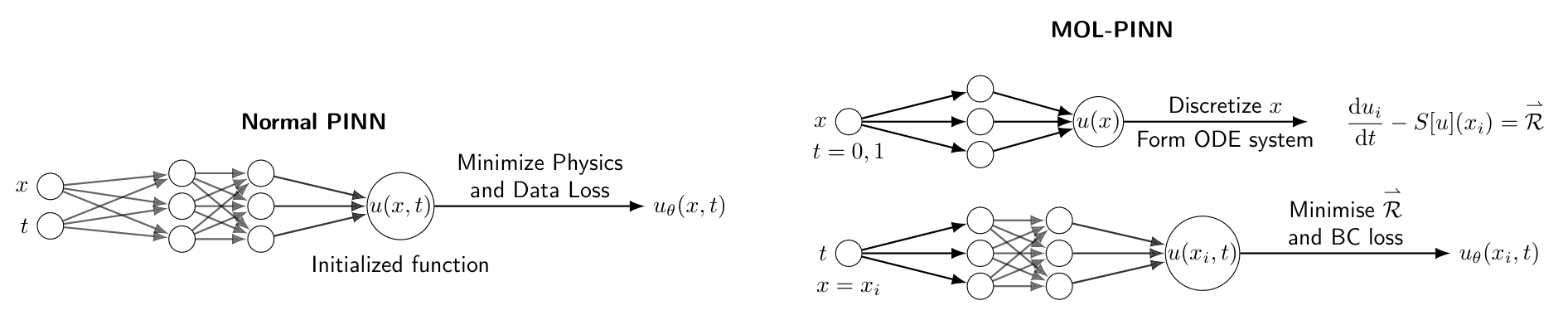
  5. Standard PINN and boundary-informed MOL-PINN architectures, showing spatial discretization and a temporal network trained on residual and boundary losses.

    Boundary-Informed Method of Lines for Physics-Informed Neural Networks

    Maximilian Cederholm, Siyao Wang, Haochun Wang, Ruichen Xu, Yuefan Deng · Co-corresponding author with Yuefan Deng

    NYSDS 2025 · SIAM Proceedings

    Combines spatial discretization with a temporal neural network to solve PDEs using boundary-informed physics losses.

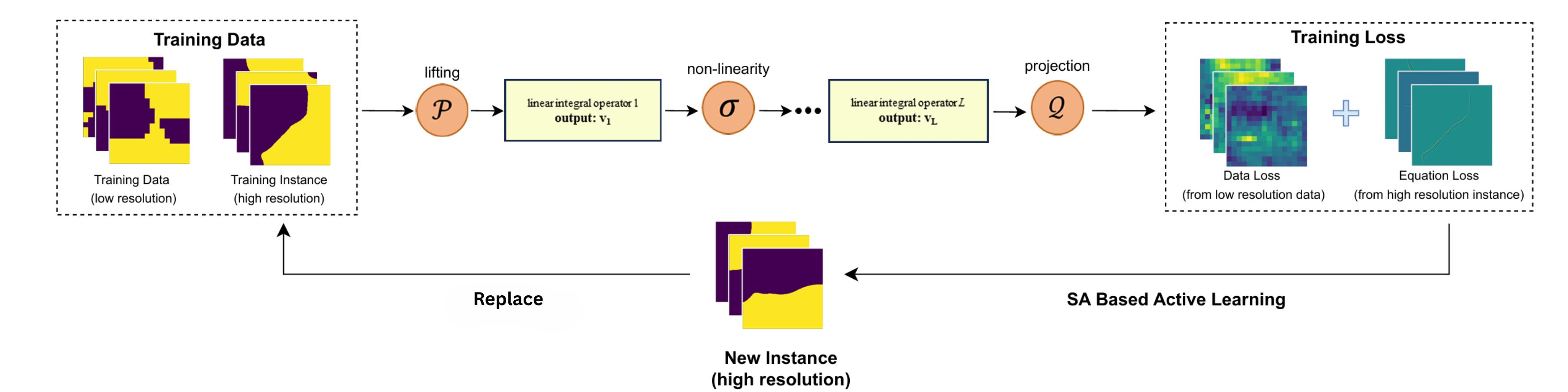
  6. PIAL workflow combining low-resolution data and high-resolution instances, physics-informed training losses, and simulated-annealing selection of new training examples.

    Physics-Informed Active Learning via Functional Simulated Annealing for Neural Operator

    Albert Ding, Siyao Wang, Haochun Wang, Ruichen Xu, Yuefan Deng · Co-corresponding author with Yuefan Deng

    NYSDS 2025 · SIAM Proceedings

    Uses physics-informed simulated annealing to select informative training examples for neural operators.

    Illustration from the author poster.

Journal articles

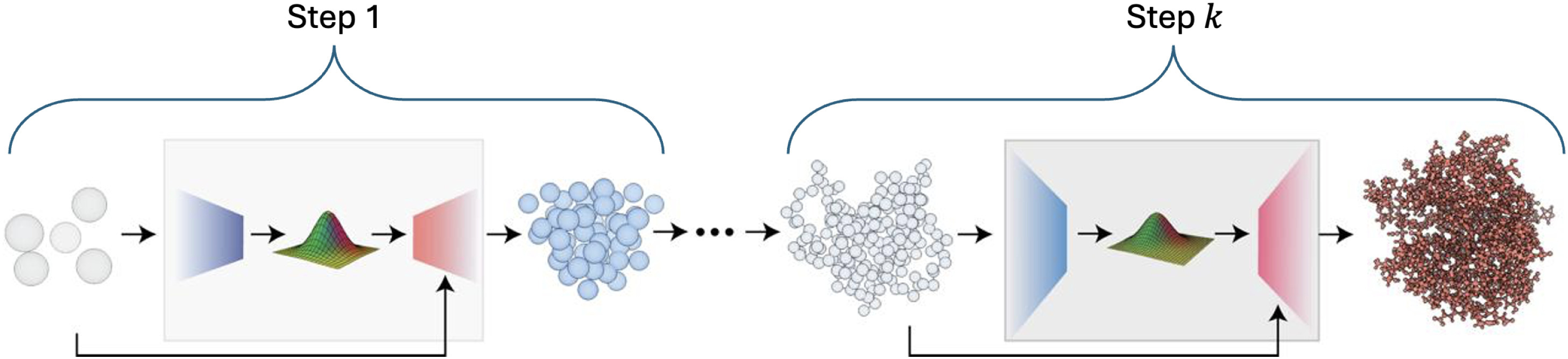
  1. Multistep protein backmapping pipeline, from coarse beads through intermediate structures to atomistic detail using successive generative networks.

    Multistep Generative Backmapping of Coarse-Grained Structures

    Georgios Kementzidis, Erin Wong, John Nicholson, Ruichen Xu, Yuefan Deng

    Computer Physics Communications · 327, 110286 · 2026

    Restores atomistic detail from coarse-grained structures through a sequence of intermediate generative models.

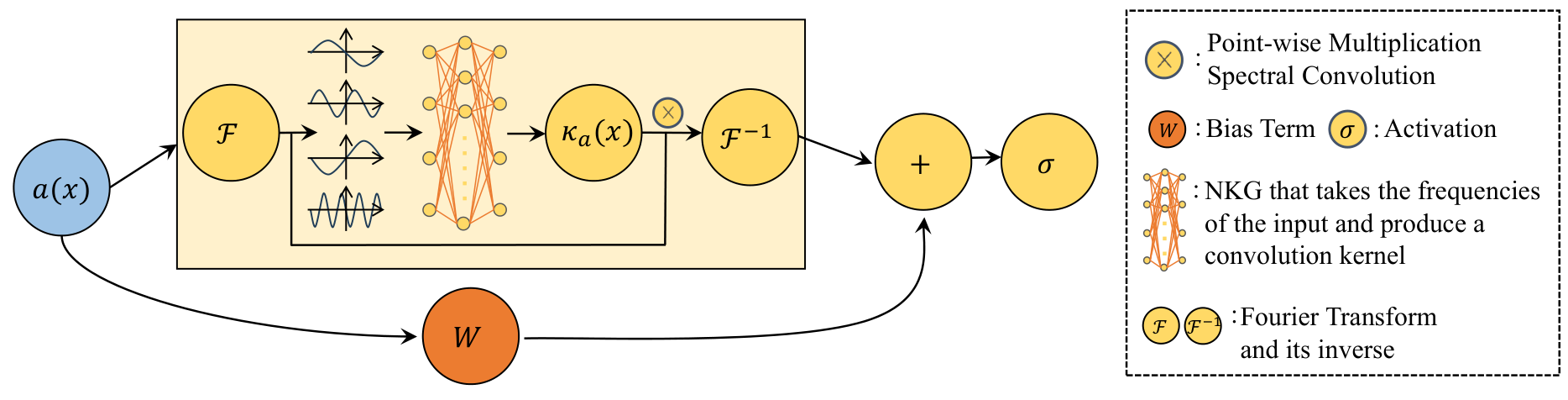
  2. A Fourier layer uses a neural kernel generator to create a convolution kernel from input frequencies before inverse transform, bias and activation.

    Dynamic Schwartz–Fourier Neural Operator for Enhanced Expressive Power

    Wenhan Gao, Jian Luo, Ruichen Xu, Yi Liu

    Transactions on Machine Learning Research · 2025

    Introduces input-dependent Fourier kernels to increase the expressive power of neural operators.

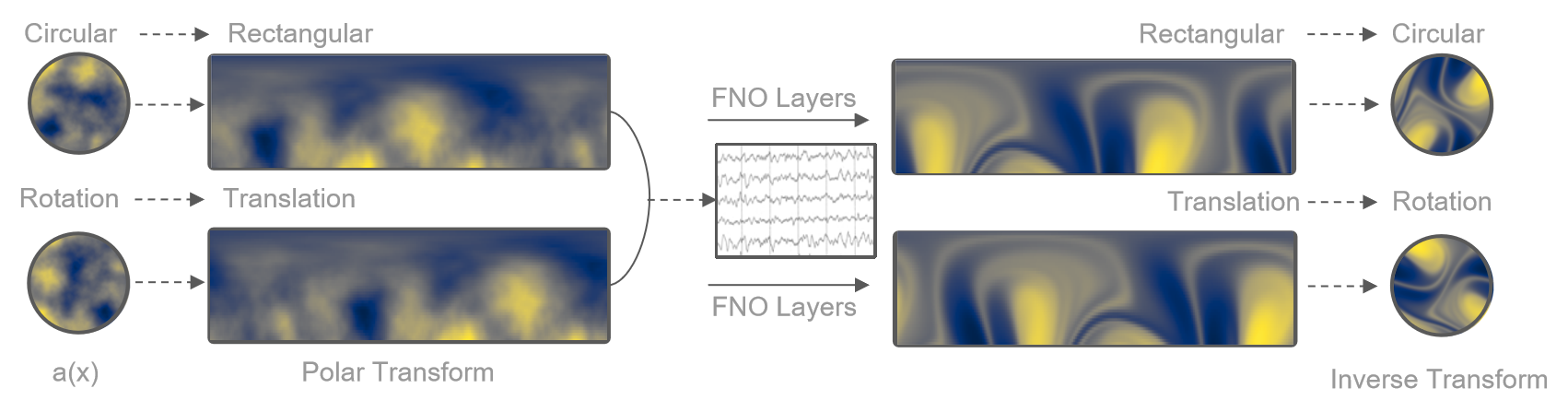
  3. CT-FNO transforms circular data to polar coordinates, applies FNO layers, and transforms solutions back while converting rotation to translation symmetry.

    Coordinate Transform Fourier Neural Operators for Symmetries in Physical Modeling

    Wenhan Gao, Ruichen Xu, Hong Wang, Yi Liu

    Transactions on Machine Learning Research · 2024

    Uses coordinate transformations to incorporate physical symmetries into Fourier neural operators.

Workshop papers

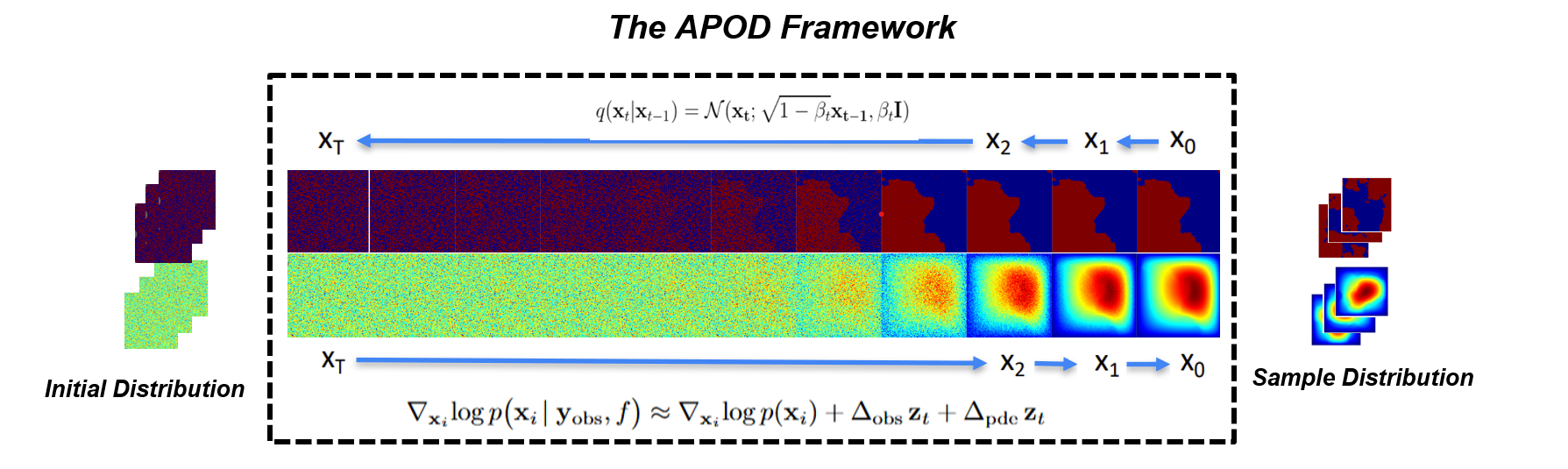
  1. APOD framework turns noisy initial distributions into samples through diffusion steps guided by observation and PDE terms.

    APOD: Adaptive PDE-Observation Diffusion for Physics-Constrained Sampling

    Ruichen Xu, Haochun Wang, Georgios Kementzidis, Chenhao Si, Yuefan Deng

    ICML 2025 Workshop on Assessing World Models · Poster

    Guides diffusion sampling with observations and PDE constraints to recover physically consistent fields.

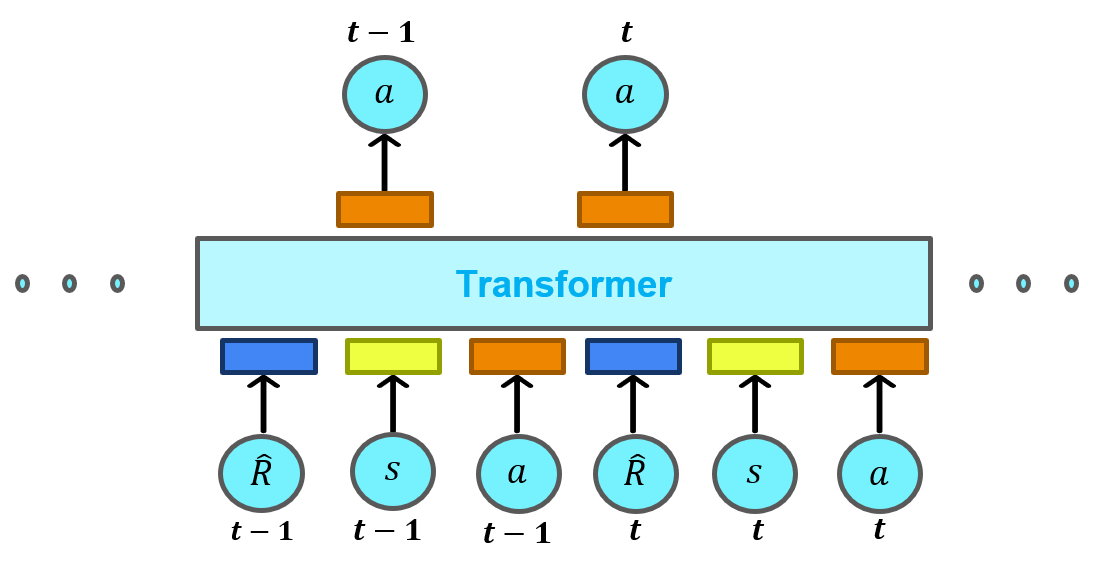
  2. RL-QESA transformer cooling policy takes past state, action and reward summaries to emit the next cooling action.

    RL-QESA: Reinforcement-Learning Quasi-Equilibrium Simulated Annealing

    Ruichen Xu, Kai Li, Haochun Wang, Georgios Kementzidis, Wei Zhu, Yuefan Deng

    2nd AI for Math Workshop at ICML 2025 · Poster

    Learns adaptive cooling policies with reinforcement learning to guide quasi-equilibrium simulated annealing.

  3. Iterative protein backmapping restores atomistic structure from ultra-coarse beads using successive prior networks and decoders.

    An Iterative Framework for Generative Backmapping of Coarse-Grained Proteins

    Georgios Kementzidis, Erin Wong, John Nicholson, Ruichen Xu, Yuefan Deng

    ICML 2025 GenBio Workshop · Poster

    Reconstructs atomistic protein structures from coarse-grained representations through successive generative refinement steps.

Submitted manuscripts

Unpublished work, listed separately from accepted and published papers.

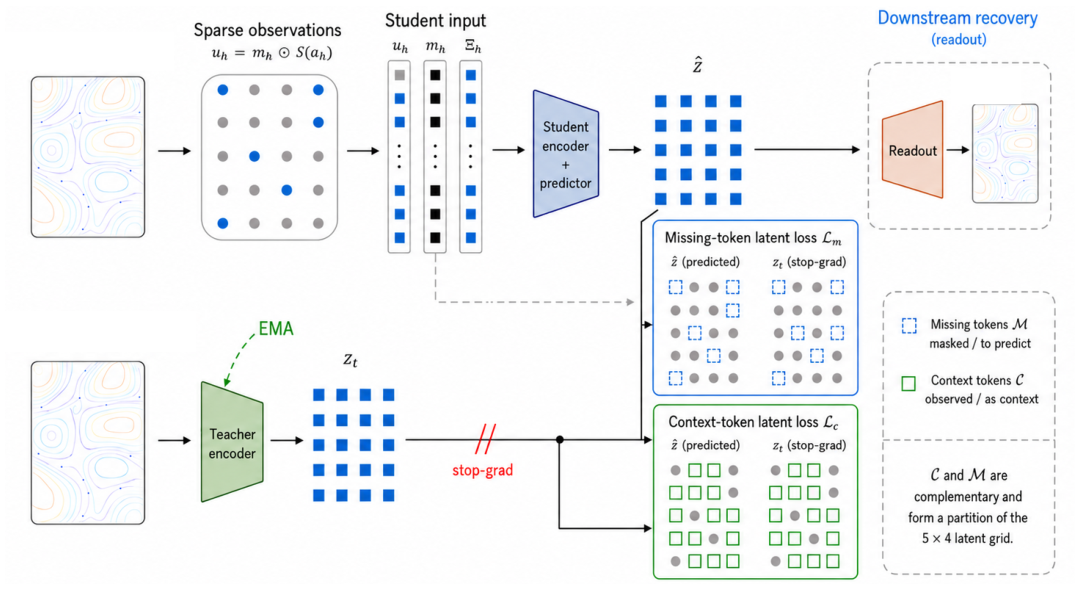
  1. Student–teacher architecture for JENO, with sparse observations, latent targets, and dense recovery.

    JENO: Full-Field Latent Prediction for Sparse Inverse PDE Inference

    Ruichen Xu, Siyao Wang, Fang Wan, Jingxiang Qu, Tian Xie, Jiaxing Zhang, Linsey Pang, Wenhan Gao, Ravid Shwartz-Ziv, Yuefan Deng

    Manuscript · NeurIPS 2026 submission

    Uses student–teacher latent prediction to reconstruct PDE fields from sparse observations.

    Submission access may require an OpenReview sign-in.